Thierry Millet
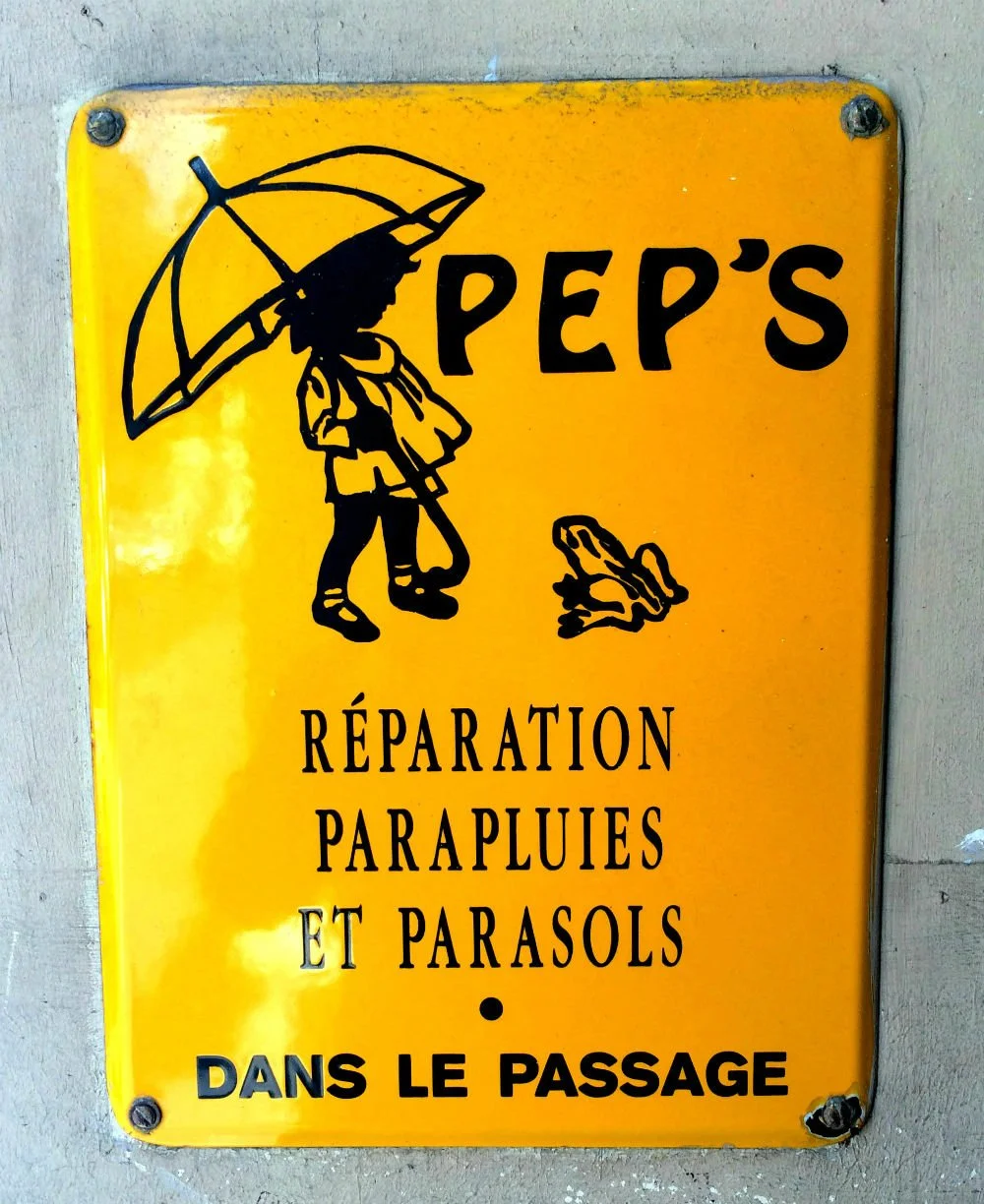
Pep’s Paris
Paris





Thierry Millet is the owner and sole employee of Pep’s, an iconic umbrella repair shop in Paris.
“I fix umbrellas, parasols, and capes. I also sell umbrellas, parasols, and capes. And I also make them.”
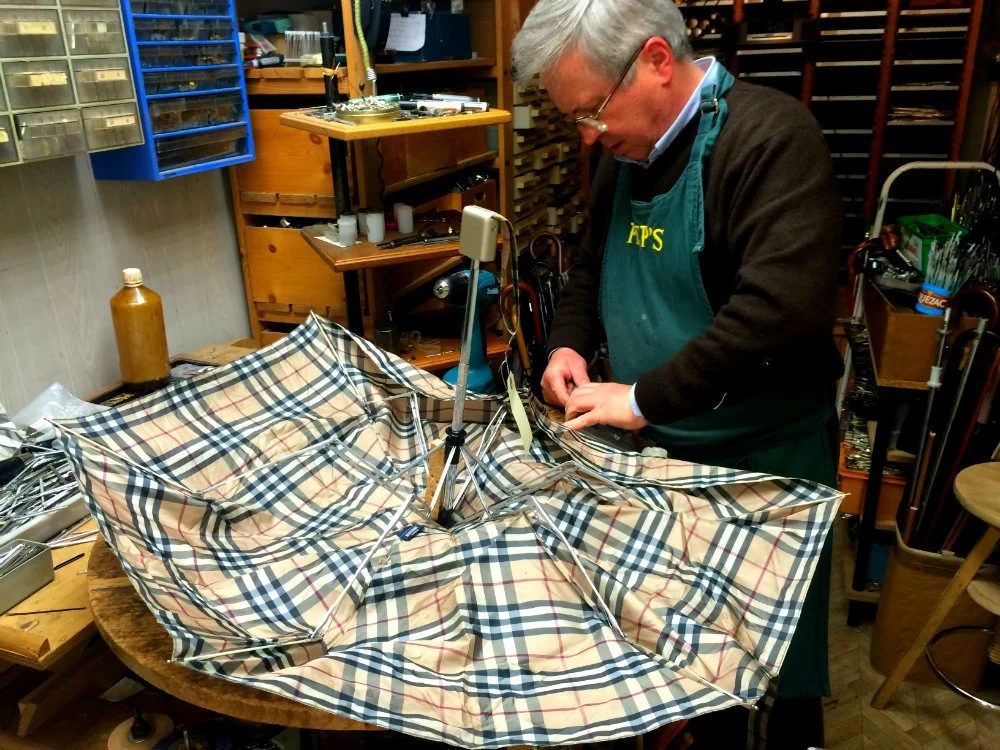
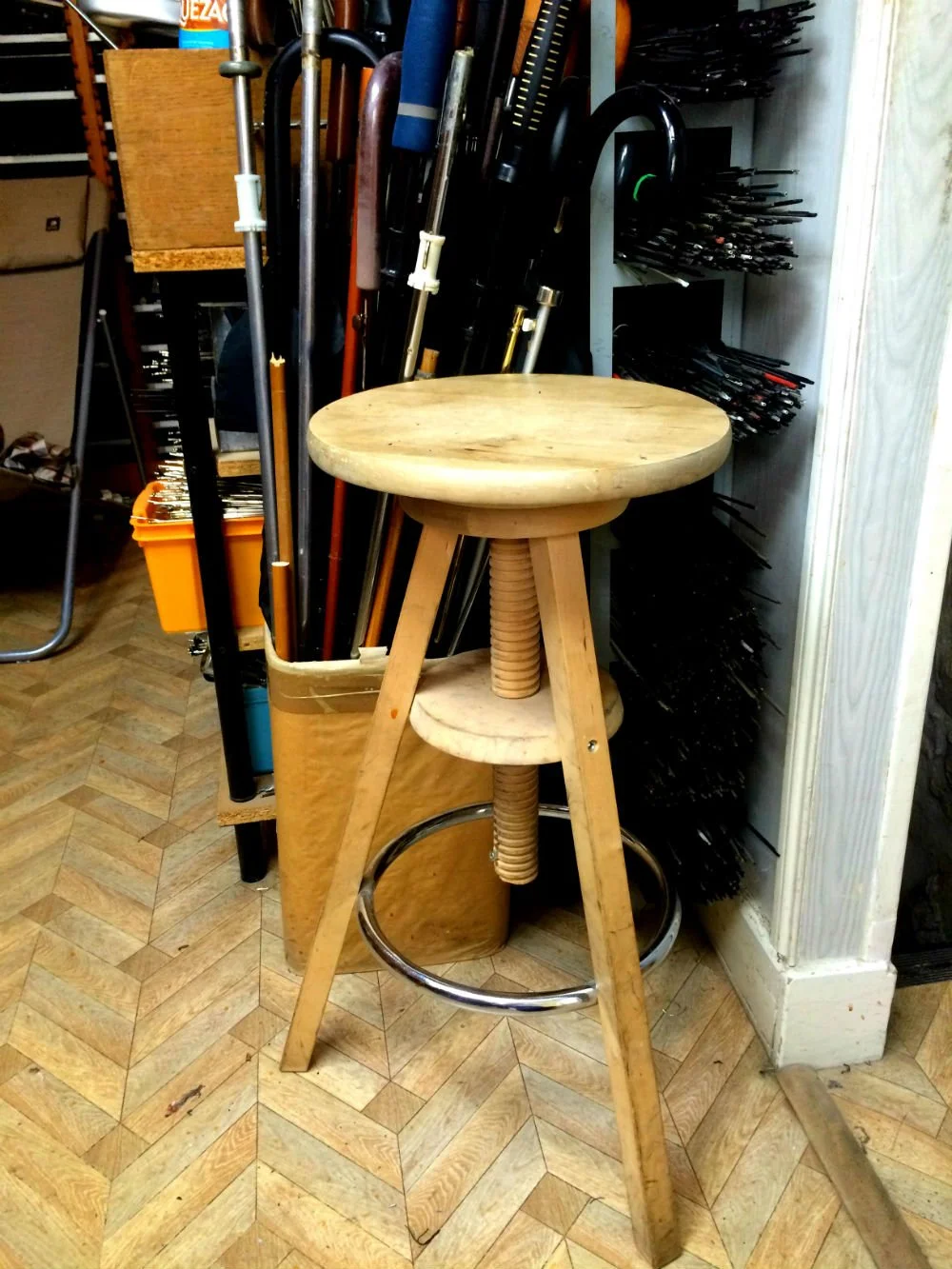
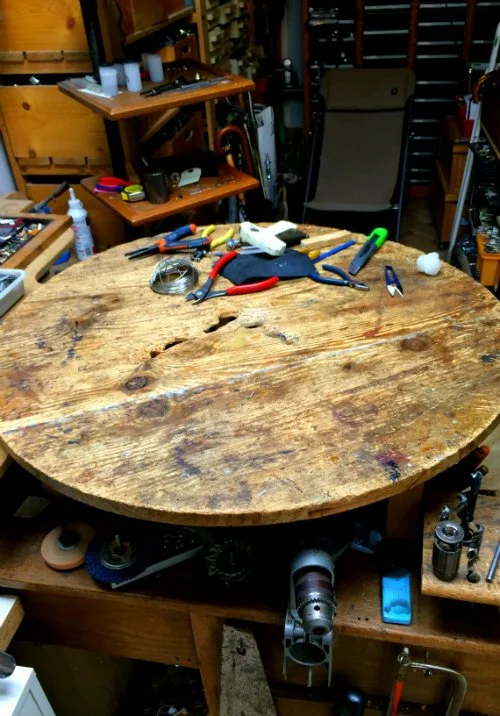
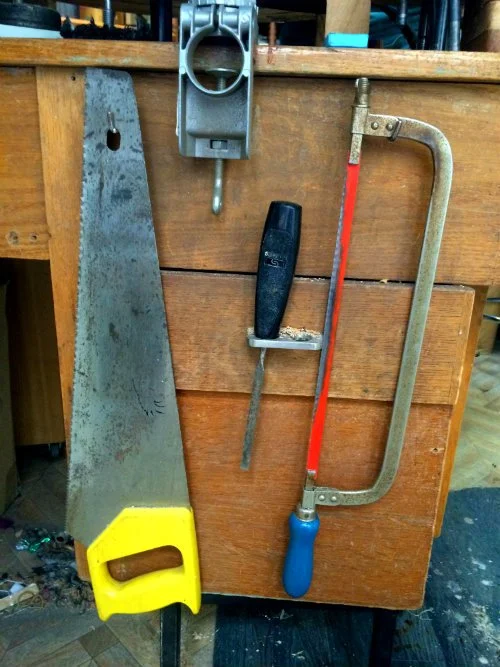
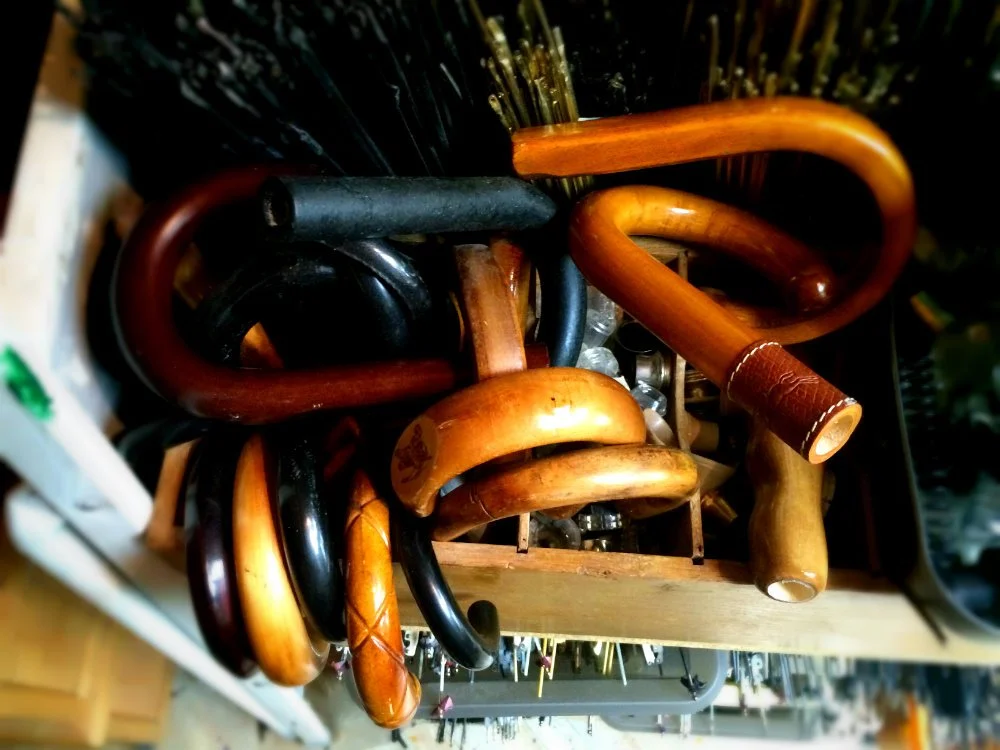
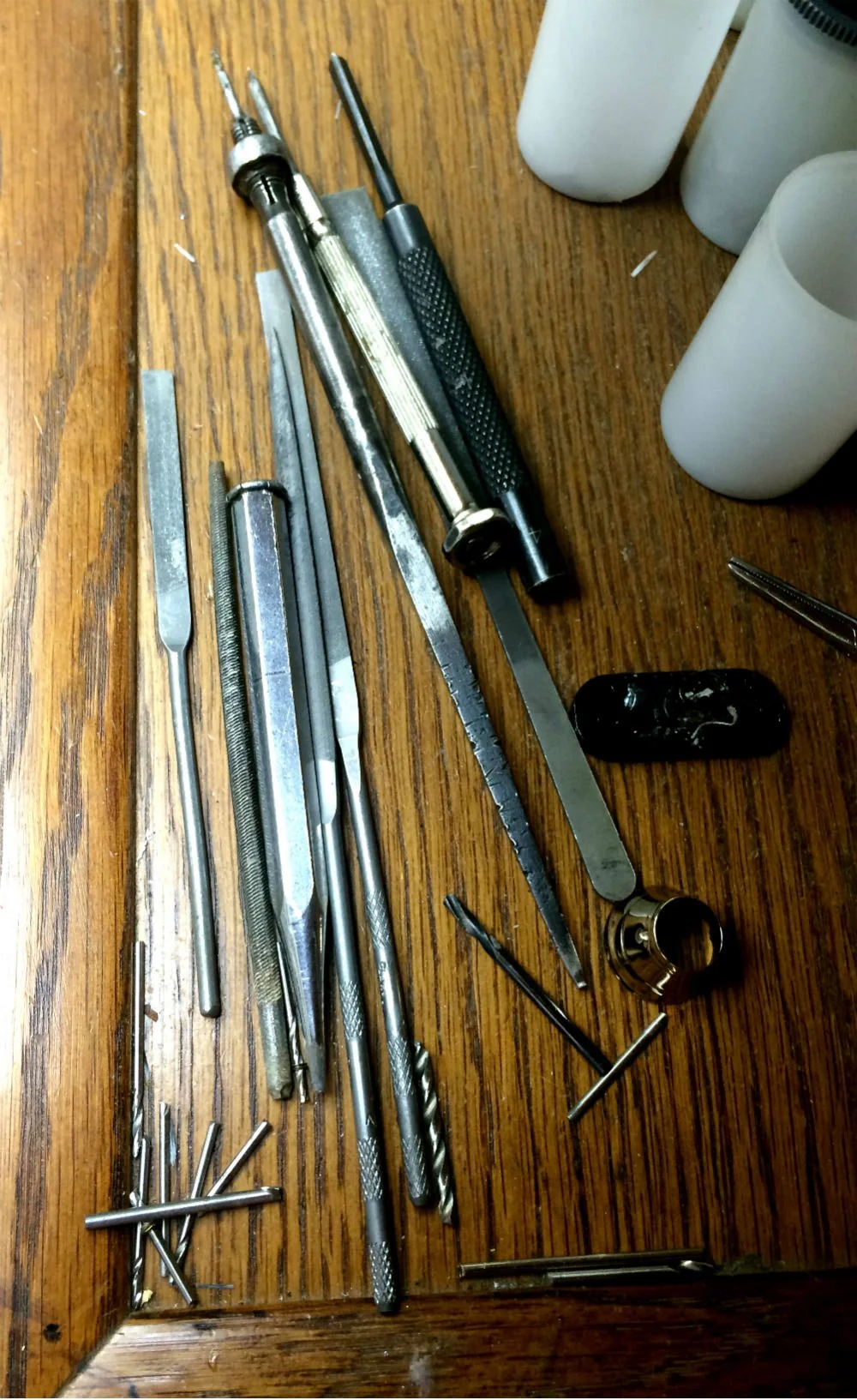
Thierry’s shop is a small space, charmingly cluttered. Racks of metal ribs coat the walls from floor to ceiling. Buckets of poles and umbrella handles sit here and there. Wooden boxes full of accessories and knick-knacks fit in shelves three to four meters high, carefully labeled with diagrams of the astonishingly proprietary shapes inside. Close at hand, dozens of tools, hooks, knives, pokers, and shapers are strewn across Thierry’s workspace. They are fascinating in their smallness.
He has a small kitchenette with a microwave, sink, and electric kettle. He kindly offers me a cup of tea, and must move a dripping hot glue gun in order to reach his mug. His front of house and till are downstairs. Upstairs, in his workshop, he has a modest window looking out onto Le Passage de L’Ancre, one of the oldest streets in Paris, which is lined with flowers and potted plants in a manicured disarray.
Started in 1967, Pep’s has passed through the hands of a few owners before landing, currently, in Thierry’s. In that time, the shop has become a global beacon of restoration for the budget-conscious and the sentimental. According to Thierry, this fame spans all manner of class.
“Pep’s is not famous. It is very, VERY famous. The simplest people as well as the most prestigious people in the world come to our store. The thing they have in common is that they love their umbrellas.”
Kings and Queens of Europe drop discreetly into his shop, he says, though he declines to name them.
The origin of Thierry’s tutelage follows a common theme among entrepreneurs and the self-employed. He used to be a high-paid Sales Director, having curated a successful career in a large corporation. Then, suddenly, it was over.
“Twelve years ago, my chief said to me, ‘You are a good boy, Thierry. But I have another good boy for the job.’”
He was removed from his post and he decided to do something different. He purchased Pep’s from a French couple in 2003.
His story speaks to the paradoxical perception of entrepreneurship as the higher-risk mode of earning one’s living. Conventional wisdom holds that relying on your own devices to earn income is more likely than not to end in failure. It is better to get a nice, safe job at a strong company.
Statistics on the failure rate of first-time entrepreneurs support this view. But, the notion of a life-long partnership between labor and capital is one that has almost entirely eroded since the mid 20th century. One can no longer expect an employer to respect the social contract that used to be a 30- to 40-year career followed by retirement. In fact, it has become not uncommon for late stage executives, middle-aged and highly-specialized, to be fired intentionally short of reaching the required cut-off to earn retirement—an entirely legal means of saving money while upending someone’s life.
Of course, mass layoffs are just as common. This month, Nokia, a Finnish brand, agreed to buy Alcatel-Lucent, a French company. It’s a deal that probably makes sense for Alcatel-Lucent, which has not been doing so well. Yet, while Alcatel-Lucent has already chopped tens of thousands of jobs over the past 10 years, the merger is likely to lead to additional layoffs as areas of operational overlap are sliced away.
Becoming complacent in your annual raise and sacred nine-to-five exposes you to catastrophic risk if you fail to recognize the need for a natural hedge against your highly-leveraged position in a single company: your employer. Entrepreneurship certainly comes standard with incredible financial risks, but, in the long term, comfort with the unknown, experience creating wealth from multiple sources, and learning to capitalize on chaos are means of securing a retirement which is, arguably, more recession-proof than a pension.
The truth is that whether you are a new graduate sitting in front of your laptop, building a new app, or a 55 year-old controller responsible for a corporation’s oldest line of business, you are already an entrepreneur. Whether you have clients or a boss, the relationship you have with your benefactor is mutually at-will. You receive money for your output, or you don’t. You manage to secure your future indefinitely, or you don’t. Ultimately, the question is: “If something disrupts your flow of income, how will you manage?”
Thankfully, Thierry has managed well. His foray into the world of self-employment has been a successful one. He runs the shop by himself as it is "better for the finances" and he seems to have an endless supply of customers.
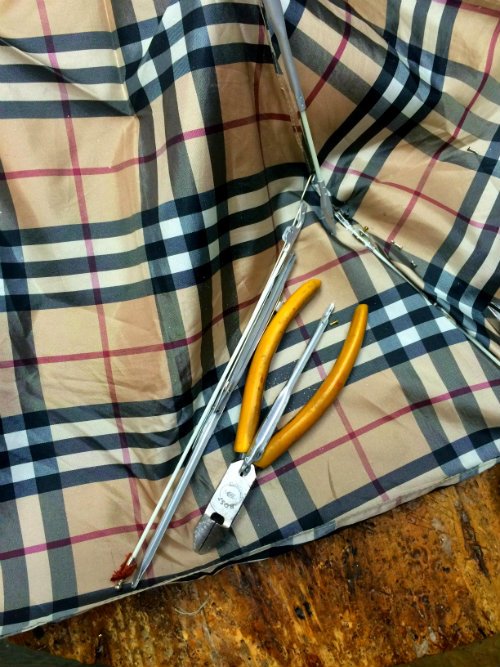
Within minutes of opening his door and getting started on his first umbrella for the day—a Burberry in the classic beige, red, and black tartan—a bell rings downstairs, summoning him to the counter. He conducts his business and returns upstairs to the umbrella. Five minutes later, the bell rings again. He only opens his doors for three hours per day, four days per week, so that he can spend most of his time on repairs. He’ll handle 10,000 umbrellas this year, he estimates. It is clear that he derives great satisfaction from his work.
"This is what makes the store beautiful. We have the ability to provide this service, which is quite an unusual service, and all we do is make people happy."