Dominique Persoone
The Chocolate Line
Bruges
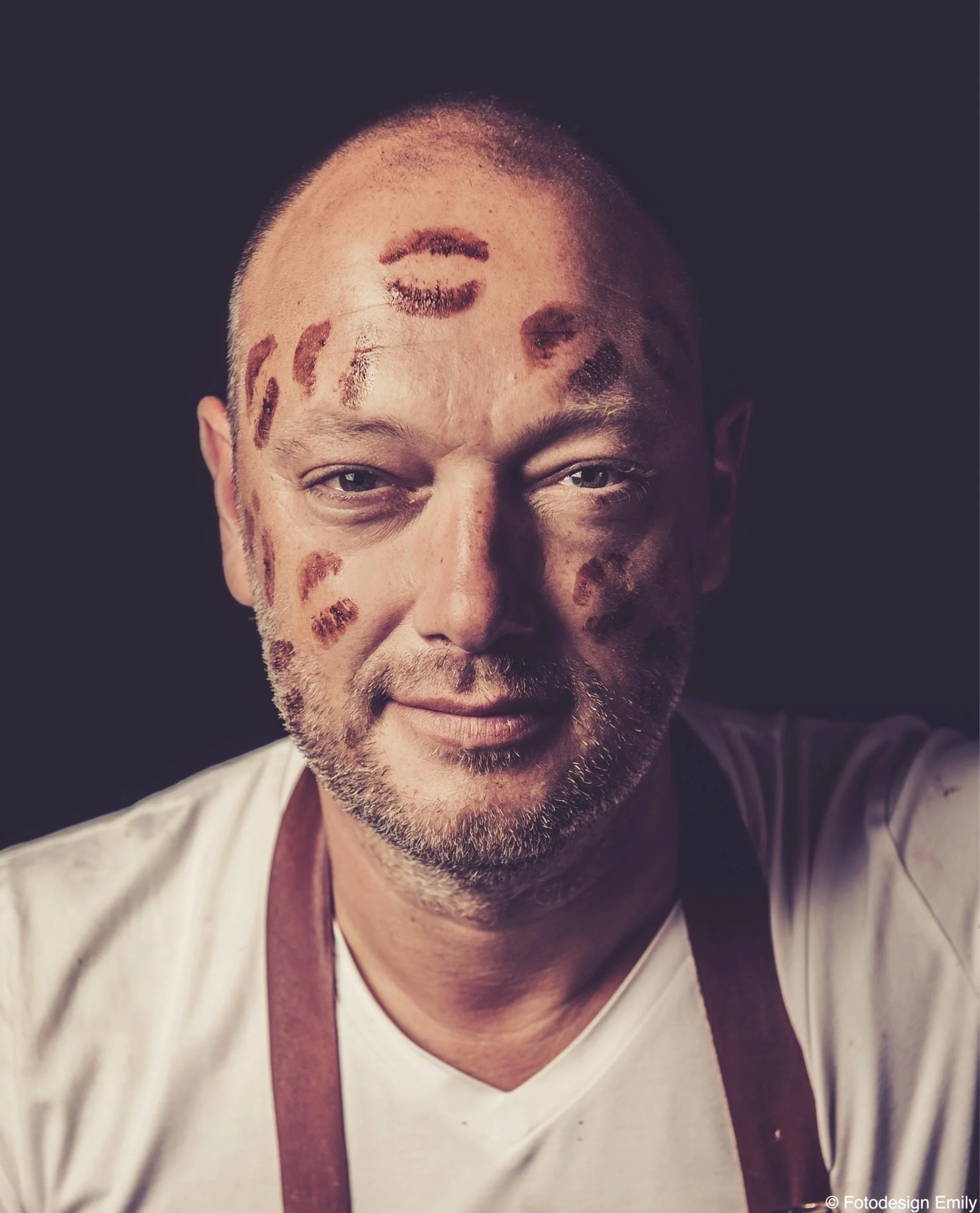
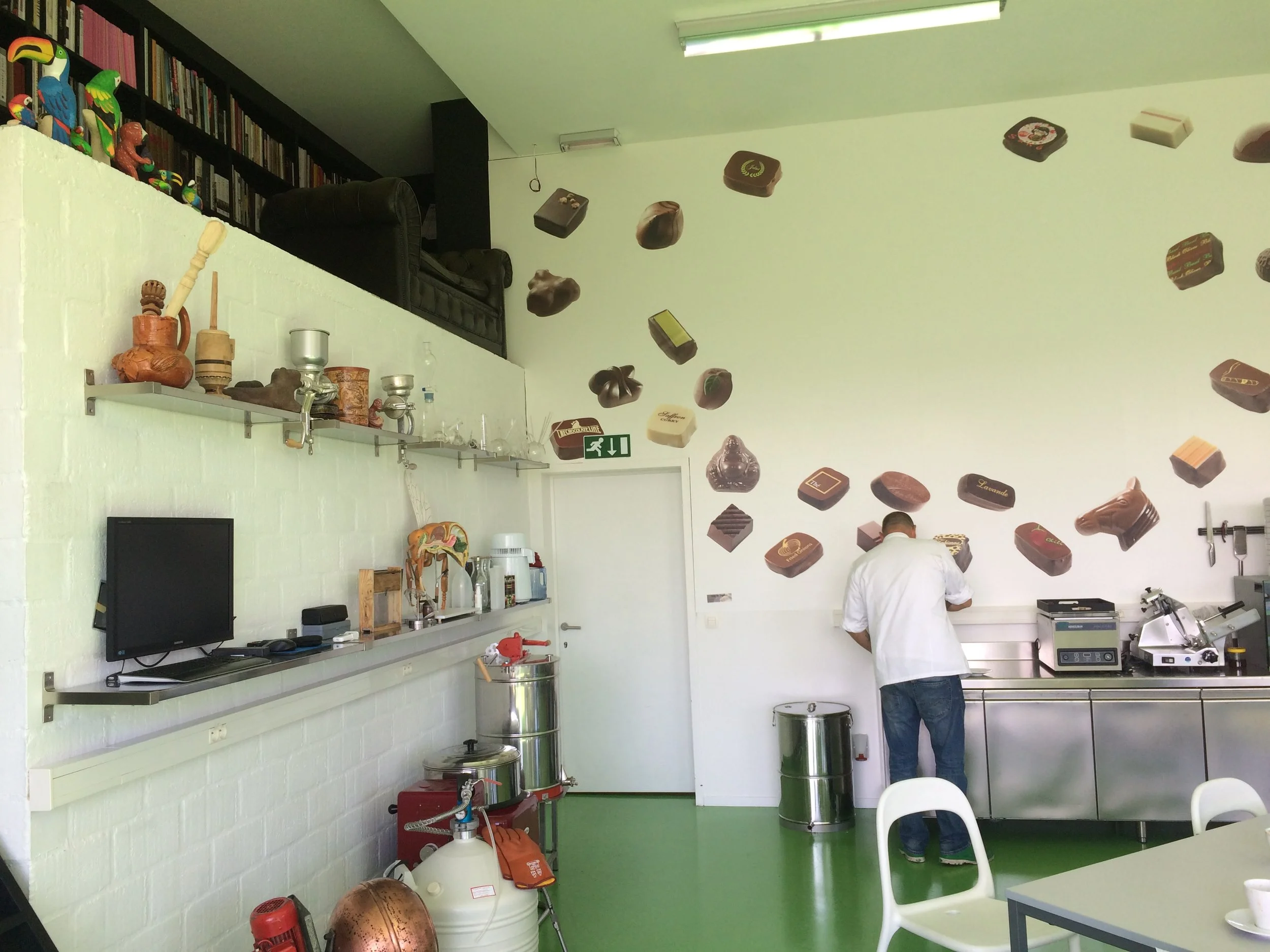

Dominique Persoone first fell in love with chocolate as an apprentice in a 3-Michelin-star restaurant in Paris. His training had been typical, making the rounds through sauces, meats, fish, vegetables, and, finally, pastries, where his fascination with a delicate process sparked an obsession.
“Chocolate is not an easy product to work with in the beginning. It's mysterious stuff. If you have to cut carrots, for example, it's easy. You have your carrots and the chef shows you how to cut your carrots, and then you can see immediately if it works or not. But tempering chocolate is really something mysterious, so for me it was really exciting to learn how to do it and then I couldn't stop. I was completely gone in chocolate.”
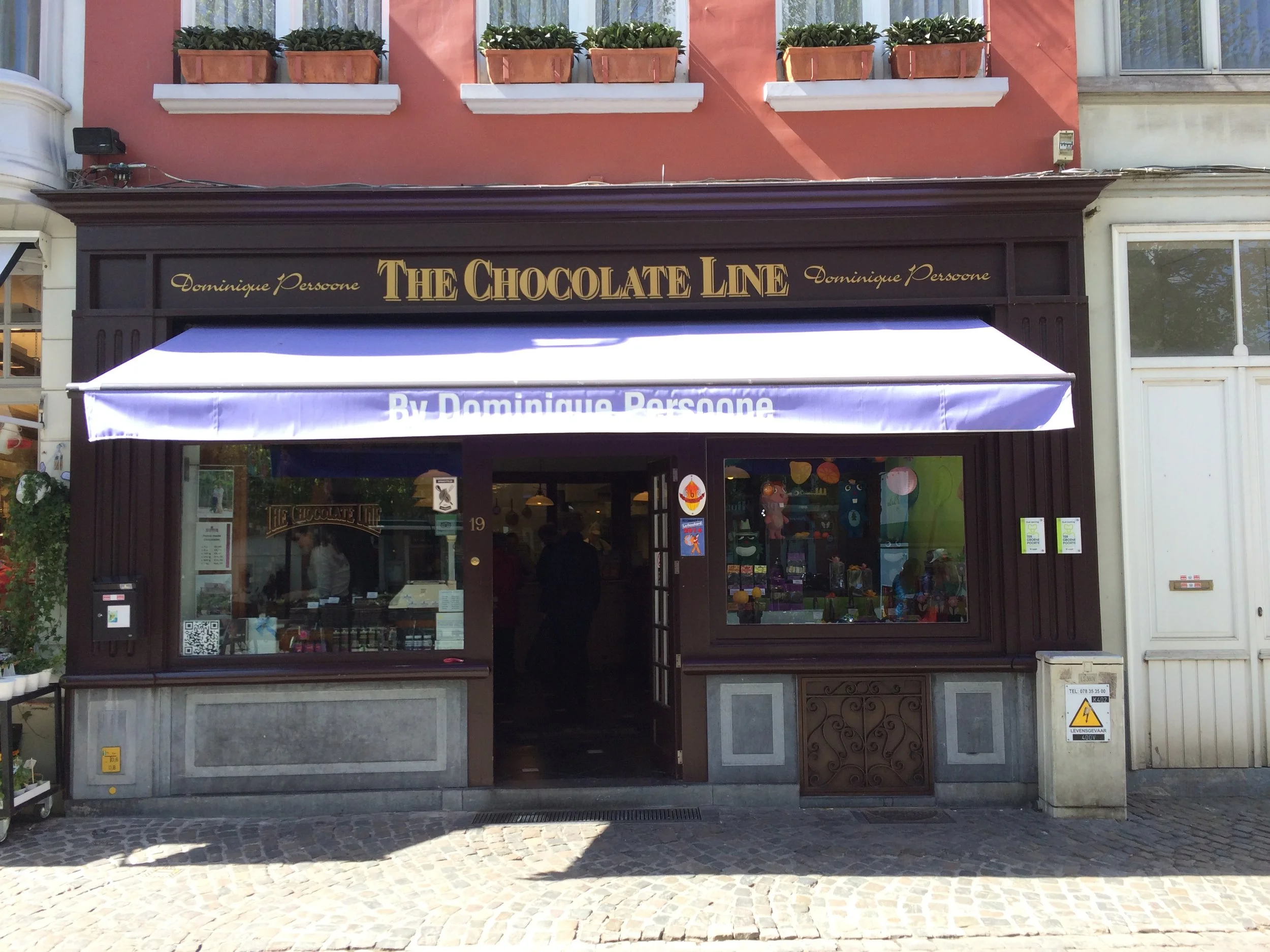
He completed his apprenticeship, and opened his first chocolate shop alongside his wife, Fabienne, in Bruges. Passersby watched from the street as he worked in the shop’s cramped kitchen. Fabienne managed the front of house.
As with most small businesses, growth in the beginning was modest, and extra hands were welcome, so Fabienne’s mother helped to sell chocolates on the weekends. In time, their business grew to be a financial success, and, with that success, Dominique was able to draw on his experience as a chef to begin what would become industry-defining experimentation in chocolate.
“Chocolates with cauliflower, chocolates with wasabi, even chocolates with chili pepper was strange 20 years ago. And most of the chocolatiers of the older generation laughed at me. They said I was a wacko, that I just wanted to be special. Now it's a big success, but in the beginning everyone thought that I was completely nuts.”
One shop led to two, then an off-site production facility, then a larger production facility, then a third shop in Antwerp, on the Meir, in the palace of Napoleon Bonaparte.
“I rent half of the palace. We're making chocolates in the original kitchen of Napoleon Bonaparte. It's amazing. And last year, we had the award for the most beautiful chocolate shop in Europe.”
As the company has grown, the model established by that first shop in Bruges remains. Each location has a kitchen in which chocolatiers make treats for curious onlookers, and Dominique remains the culinary soul of the Chocolate Line while Fabienne handles the business.
“Food is the only thing I know. I’m the worst business man in the world, I'm sure about that. I give all my money to my wife, and every week my wife gives me money for cigarettes and beer and newspapers and it's the perfect system.”
Dominique allows his stomach and his heart to drive his process, remaining boldly childish and creatively naive as he experiments with onions, cigars, helium, and even bioluminescent enzymes and pigments. His approach is one often employed by successful entrepreneurs:
"If you create something and you are sure that the flavor is nice and good and you believe in your product—and you have to be honest with yourself—then you will sell it and you will see that the people will follow.”
Occasionally, this even includes vetoing your trusted business and life partner:
“I was contacted by the ladies of the Rolling Stones. They wanted to organize a surprise party for their husbands. On Friday, it was the birthday of Ronnie Wood and Saturday was the party of Charlie Watts, the drummer. I made a funny menu with lots of crazy stuff, and one of the things we did was make a machine for sniffing chocolate, the Chocolate Shooter.
“We made the dessert with different structures of raspberry and instead of putting chocolate on the dessert, we had them sniff chocolate. It was just a funny idea, I thought, but nobody believed in it. Even my wife was angry, ‘No don't do it, it's too dangerous, and they're gonna sue you, and it's gonna be in his eye, etc.’ But sometimes you have to believe in yourself and if your stomach says, ‘that's fun,’ then do it. We only made one for that night and, now, we've sold over 25,000 machines all over the world. There was not a business plan behind it, but with your fantasy, you can make amazing stuff.”
As the chocolate shops achieved self-sustaining growth, Dominique and Fabienne became restless with their success. Dominique embarked on an expedition to Mexico in search of the roots of chocolate. Upon his arrival, he was shocked to find that his mastery of chocolate was lacking an appreciation of the depth of the medium.
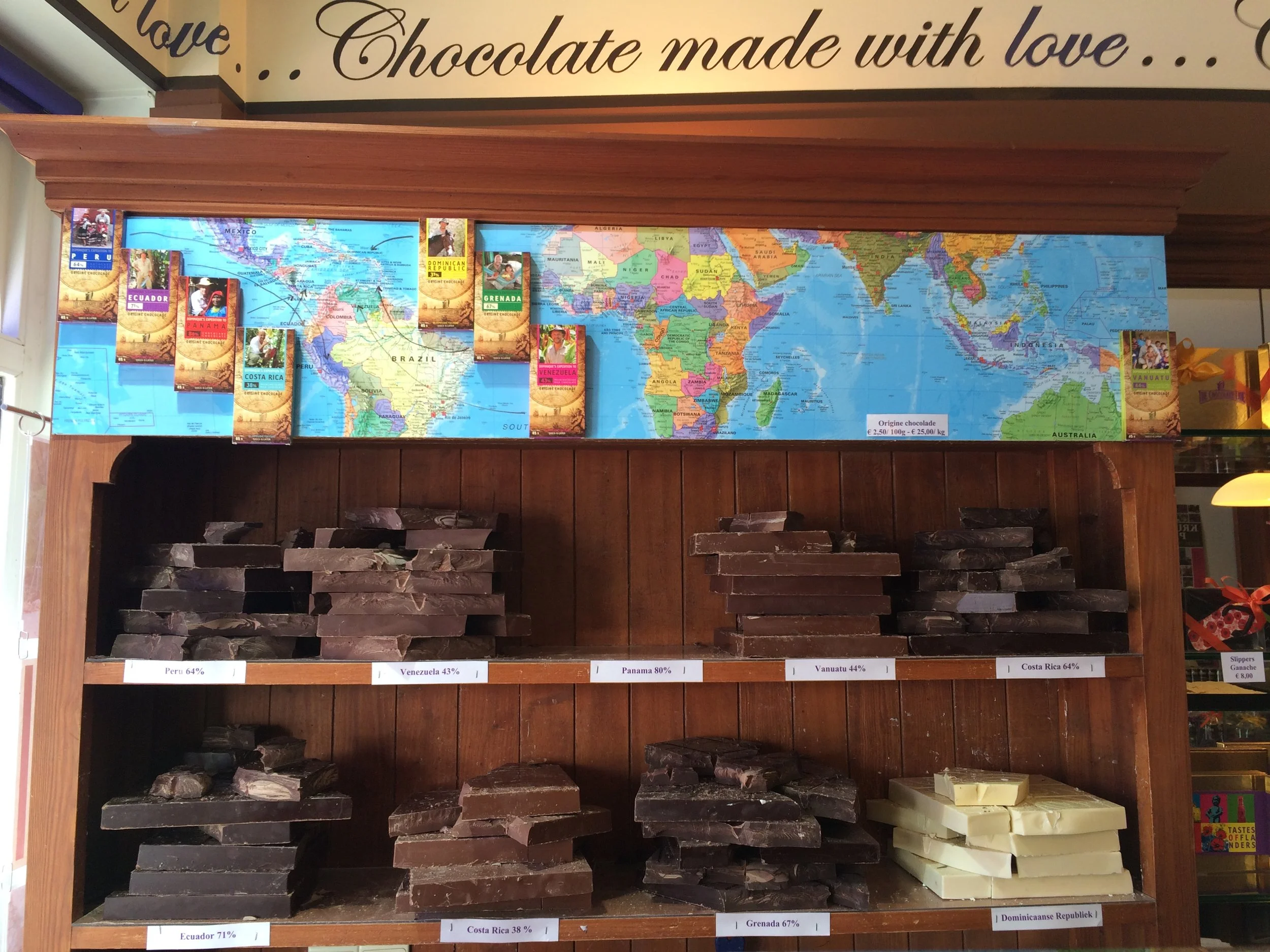
“Here in the western world we think we know everything, but you go there and it's a completely different world of chocolate. I was so impressed. Here we learn that there are three varieties: Criollo, Forastero, and Trinitario. I went there and the first plantation had 26 varieties. In the meantime, I’ve discovered there are more than 1200 varieties of chocolate.”
He would return to Latin America soon thereafter, accompanied by a journalist, to explore in greater depth this new old world. Their journey took them through Peru, Brazil, Costa Rica, Honduras, and Panama, and resulted in a book, ‘Cacao: The Roots of Chocolate’. In 2008, his book won the Gourmand World Cookbook award for the best book on chocolate. It was a complete surprise and incredible honor.
“When you have that in the world of chocolate, it’s like ‘WOW’. All the other guys that won that before me are, like, legendary chocolate chefs.”
While researching for and writing his book, Dominique learned of an existential threat to the Criollo cacao bean. For most chocolatiers, the Criollo is the highest quality cacao bean. But Criollos are extremely sensitive to disease, and the price of Criollo beans reflects neither the higher quality of the beans nor the production difficulty.
“Forasteros and Trinitarios are purple, but the Criollos are white all the way through. When you make chocolate with it, it looks brown, it looks like milk chocolate, but it's made from the white bean, and the flavor is the most amazing thing.”
“I saw that world wide those varieties are dying because farmers don't want to invest in Criollos. And the reason they don't want to invest is that the price of cacao in the world is flat. If it’s good quality or bad, nobody gives a shit, it's just the price of cacao.”
Resolving to do something about the decline of his beloved bean, he opened a Chocolate Line plantation in Yucatan, Mexico. He has planted 3,400 cacao trees of three different Criollo varieties. Last year, he produced 80 kilograms of beans, this year he’ll produce 500 kilograms, and next year he hopes to produce 3 tons. None of it will go to market—the Chocolate Line uses 70 tons of cacao beans annually—but the goal is to help preserve the terminal Criollos.
Like many chocolate plantations, Dominique plants banana trees alongside the cacao. Bananas grow quickly and put off lots of shade—which cacao trees need—so it’s a convenient partnership. But if each cacao tree gets one or two banana trees, and you have a cacao plantation, then, by default, you also have a banana plantation.
“In the beginning I gave the bananas to my team and said, ‘Take them home.’ But, after a while, they said, ‘Dominique, keep your f’ing bananas.’"
In finding a place to offload their superfluous produce, Dominique and Fabienne began working with a local animal rescue center, which was grateful for the free food. They have adopted six rescued monkeys, who live in a protected space on the Chocolate Line plantation, and Fabienne has started a line of herbs and spices, all grown in Mexico, with all profits going to the animal rescue center.
These days, Dominique explores the world in chocolate pilgrimage. Central America, South America, Europe, East Asia; along the tropical belt, he searches for not only the best beans in the world, but unconventional and unattainable flavors that he can't find via traditional outlets, and his collection has grown spectacularly.
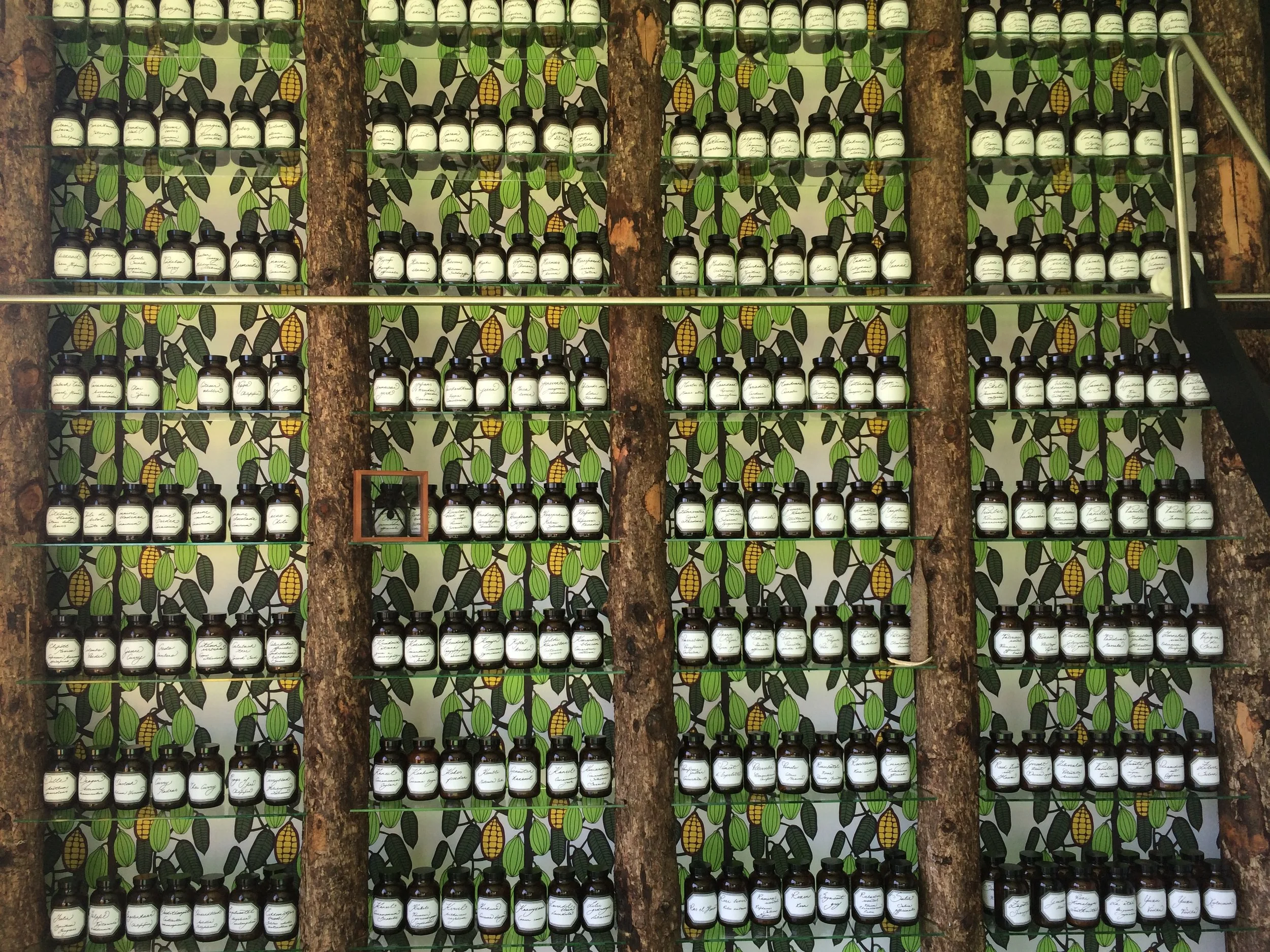
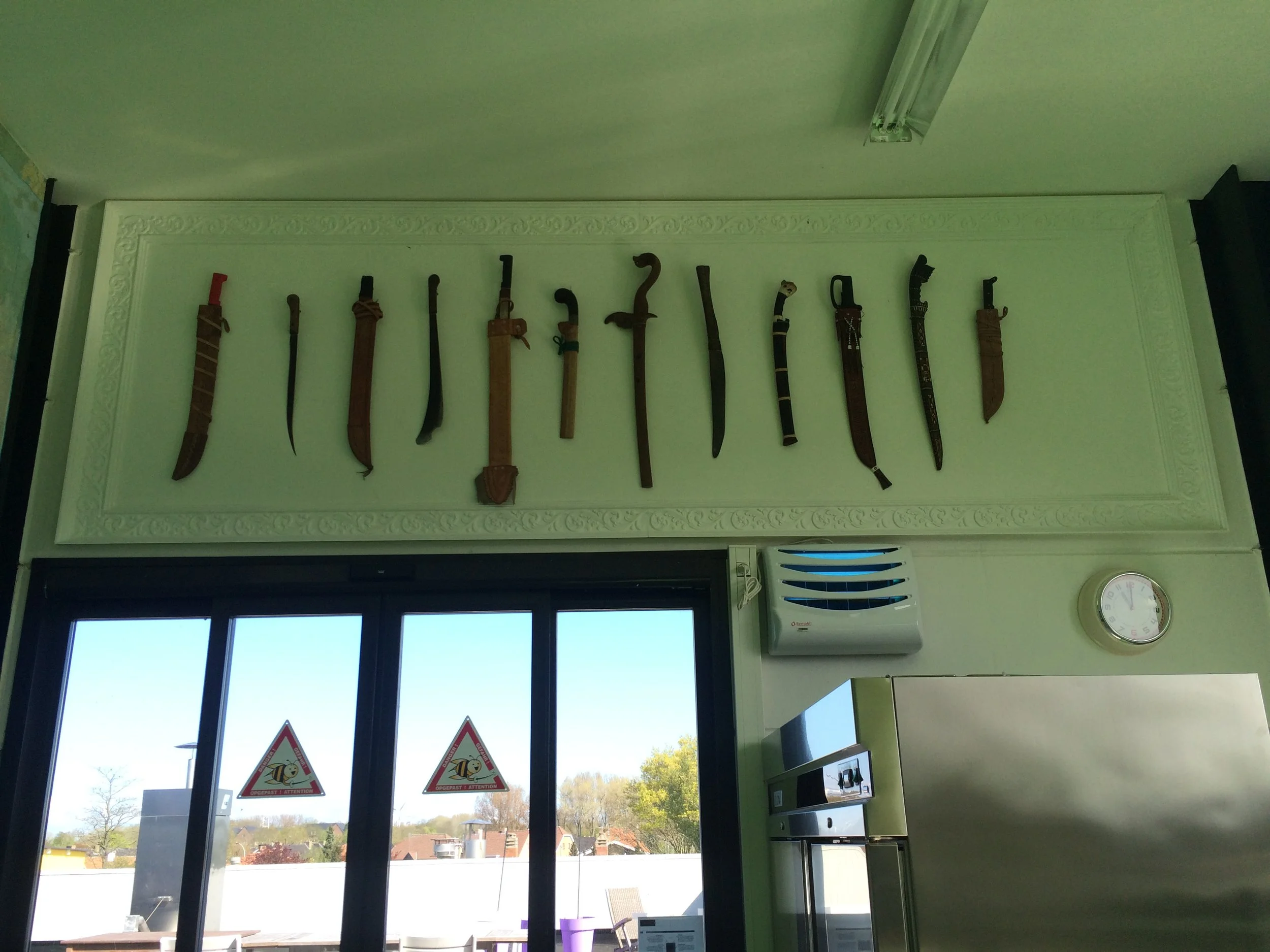
In his test kitchen on the second floor of his production facility in Bruges, one wall is covered with ceremonial machetes, his souvenir of choice, and another with meticulously labeled jars of ingredients, spices, and herbs he has recovered from across the world, both legal and… not.
“It’s fine to experiment, but nothing without official documentation can go into production.”
Despite all his responsibilities—maintaining a family, co-running a world class business, operating across the globe, constantly innovating and creating, lecturing, appearing on television, presiding over the Bruges Chocolate Guild—Dominique is still, at heart, the boy who began in his father’s kitchen.
“I do a lot of presentations for aspiring people. The message from my presentations is always, don't be afraid. Stay the small boy that doesn't think too much, and believe in yourself. I don’t have a business plan for the Chocolate Line. It's just fun. And life…” he snaps his fingers and smiles “…goes so quickly. You have to enjoy it, no?”